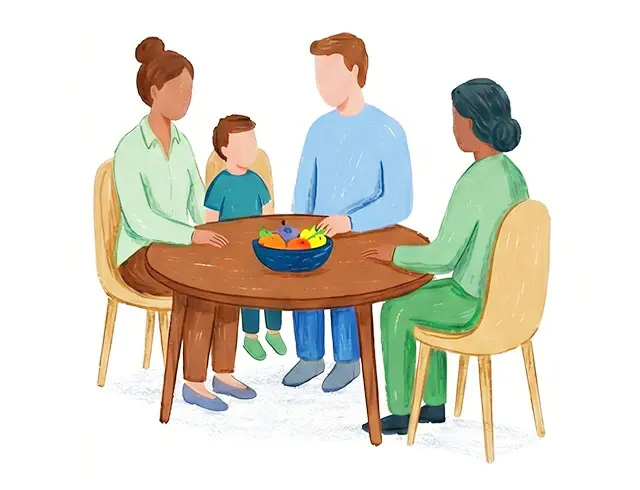
Techniques used in family counselling
Family counselling is shaped around your family’s needs, values and culture. Depending on the situation, sessions may include:
- Family communication skills
- Conflict resolution strategies
- Parent guidance
- Problem-solving skills
- Cognitive-behavioural techniques
- Supportive counselling
What is family counselling?
Family counselling in Islamabad, Rawalpindi and online
Family counselling brings family members together, all at once or a few at a time, to improve communication and resolve conflict. Instead of blaming one person, it looks at the patterns between everyone at home. Sessions are available in person in Islamabad and Rawalpindi, or online when relatives live in different cities or countries. It can also help when a family member is struggling with:
Family counselling suits nuclear and joint families alike, including parents and teenagers, couples living with in-laws, and adult children caring for elderly parents.
Benefits of family counselling
When a family learns to communicate and solve problems together, every member benefits, and the changes at home tend to last.
Better communication
Family members listen, express their needs clearly and argue less.
A calmer home
Less tension, with agreed ways to handle disagreements.
Stronger parent–child bond
Parents understand their children’s behaviour and respond with consistency and warmth.
Support through change
Cope together with divorce, illness, relocation, a new baby or the loss of a loved one.
Signs your family could use support
Common problems families bring to counselling
- Frequent arguments or tension at home
- A teenager who is withdrawn, defiant or struggling at school
- Breakdown in parent–child communication
- Conflict between spouses and in-laws
- Adjusting to divorce, remarriage or a blended family
- Coping with a family member’s illness
- Grief after losing a loved one
- Siblings in constant conflict
Hear from our clients
Stories of transformation
Frequently
Asked Questions
Family counselling FAQs
Q1: Who should attend family counselling?
It depends on the problem. Sometimes the whole family attends; at other times only the parents, or a parent and child. Who to include is agreed after the first session.
Q2: How long does family counselling take?
It depends on the family and the problem. Progress is reviewed together regularly, so you can decide how long to continue.
Q3: What if a family member refuses to come?
Counselling can still start with the family members who are willing. Positive change in some members often shifts the whole family, and others may join later.
Q4: Can family counselling be done online?
Yes. Online sessions let family members join from different cities or countries, which helps families with relatives living abroad.
Q5: Is family counselling confidential?
Yes. What’s shared in sessions stays private. Any exceptions related to someone’s safety are explained at the start.